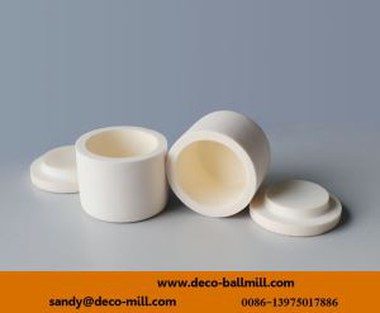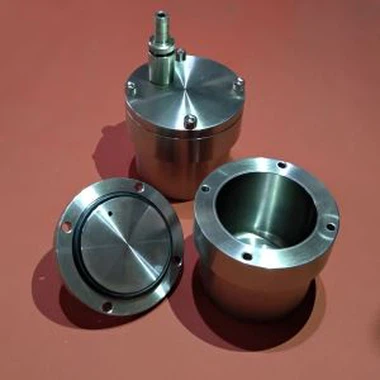
what are ball mill jars used for
May 17, 2024
Ball mill jars are essential components of ball mills, serving various purposes in milling operations. Here are some common uses of ball mill jars:
1. Containment:
Ball mill jars serve as containers to hold the material being milled and the grinding media (such as balls or beads). They provide a secure enclosure for the milling process, preventing spillage or contamination of the surrounding environment.
2. Mixing and Blending:
Ball mill jars are used for mixing and blending different materials to achieve homogeneity or to create composite materials. They allow for thorough mixing of powders, liquids, or slurries, ensuring uniform distribution of components.
3. Grinding and Size Reduction:
The primary function of ball mill jars is to facilitate the grinding and size reduction of materials. By rotating the jars along with the grinding media, materials are subjected to mechanical forces that break them down into smaller particles. This process is crucial in various industries, including mining, pharmaceuticals, ceramics, and chemical processing.
4. Particle Size Control:
Ball mill jars enable precise control over the particle size distribution of milled materials. By adjusting factors such as milling time, speed, and the size and type of grinding media, users can achieve the desired particle size for their specific application requirements.
5. Material Processing and Synthesis:
Ball mill jars are used in material processing and synthesis processes, such as mechanical alloying, solid-state reactions, and powder metallurgy. These jars facilitate the blending of reactant powders and promote the formation of desired phases or compounds through milling-induced reactions.
6. Research and Development:
In research and development laboratories, ball mill jars are indispensable tools for conducting experiments, testing new materials, and exploring various milling parameters. They allow researchers to investigate the effects of different milling conditions on material properties and performance.
7. Quality Control:
Ball mill jars play a role in quality control processes by enabling the production of consistent and reproducible milled products. By using standardized milling procedures and equipment, manufacturers can ensure the uniformity and reliability of their final products.
8. Sample Preparation:
In analytical and testing laboratories, ball mill jars are used for sample preparation prior to analysis. They can grind samples to a fine powder or homogenize them for subsequent testing techniques, such as spectroscopy, chromatography, or microscopy.
Conclusion:
Ball mill jars are versatile tools with a wide range of applications in various industries and research fields. Whether for grinding, mixing, blending, or material synthesis, these jars provide essential containment and processing capabilities for milling operations. Their importance lies in their ability to facilitate efficient and controlled size reduction and material processing processes.