How to use Planetary Ball Mill
Sep 12, 2025
Core Working Principle
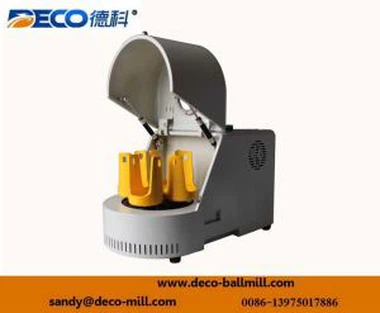
A planetary ball mill has one or more grinding jars (planets) that rotate around a central axis (sun wheel) while simultaneously rotating on their own axes. This creates high-energy impacts due to centrifugal and Coriolis forces, leading to rapid size reduction and mixing.
Step-by-Step Operating Procedure
1. Preparation & Safety
Safety First! Always wear personal protective equipment (PPE): safety glasses, lab coat, and gloves.
Secure the Mill: Ensure the mill is on a stable, vibration-free surface.
Check the Equipment: Inspect the grinding jars and balls for cracks or damage. Never use damaged equipment, as it can shatter under high stress.
2. Selecting Grinding Jars and Media
This is the most critical step for success and avoiding contamination.
| Material | Advantages | Ideal For | Not Recommended For |
|---|---|---|---|
| Stainless Steel | Durable, cost-effective | Hard, abrasive materials (ores, ceramics). Not sensitive to Fe contamination. | Acidic samples, materials sensitive to metal ions. |
| Agate (SiO₂) | Hard, low contamination | General purpose, X-ray diffraction (XRD) samples, geochemistry. | Strong alkaline materials. |
| Zirconium Oxide (ZrO₂) | Very hard, high density, low wear | High-energy grinding, nanomaterials, mechanical alloying. | HF acid environments. |
| Tungsten Carbide (WC) | Extremely hard, high density | Extremely hard materials (e.g., silicon carbide). | Cost-sensitive projects; can introduce Co binder. |
| Polyurethane / Nylon | Contamination-free, flexible | Soft, sticky materials; food, pharmaceuticals. | High-energy grinding, high temperatures. |
Media Size: Use larger balls (Ø10-20mm) for coarse grinding and smaller balls (Ø0.5-3mm) for fine/ nano grinding.
Media-to-Powder Ratio: A good starting point is 2:1 to 5:1 (by weight). Higher ratios yield finer particles but generate more heat.
3. Loading the Jar
a.Charge the Grinding Balls: Place the selected balls into the jar.
b.Add the Sample: Introduce the powder sample.
Dry Grinding: Load powder directly.
Wet Grinding: Add the liquid grinding aid (e.g., water, ethanol, hexane). The typical liquid-to-powder ratio is 0.5:1 to 1.5:1 (by volume). Do not fill the jar more than 1/3 full (including all media and sample).
c.Secure the Lid: Ensure the lid is tightly and evenly sealed according to the manufacturer's instructions. For inert or vacuum grinding, connect the appropriate valves.
4. Mounting Jars and Counterweights
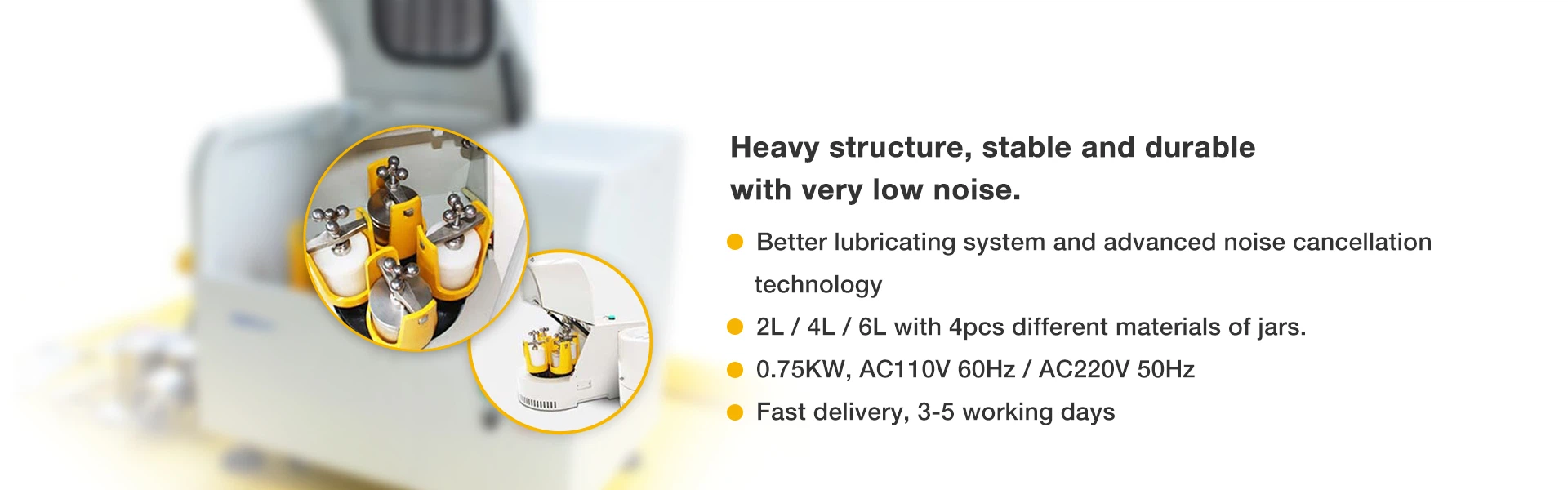
Symmetry is Key: Always use an even number of jars (2 or 4).
Balance the Load: Place jars diagonally opposite each other. Each pair of jars must have identical weight (within 1-2 grams). Use counterweight jars if you are not using all positions.
Secure Jars: Firmly clamp the jars onto the planetary disk. An unbalanced load will cause excessive vibration and damage the mill.
5. Setting the Parameters
Speed (RPM): This is the most important parameter.
Do not operate at 100% speed. Start at 50-75% of the mill's maximum speed.
Time: Grinding cycles can range from a few minutes to several hours. Start with a shorter time, check results, and extend if necessary. For long runs (>30 min), use interval mode (e.g., run 10 min, pause 5 min to cool down).
Rotation Direction: Some advanced mills allow you to reverse rotation direction periodically to prevent "dead zones" and improve homogeneity.
6. Running the Process
a.Close the safety door.
b.Start the mill.
c.Monitor closely for the first few minutes for any unusual noise or vibration. If excessive vibration occurs, stop immediately and re-balance the jars.
d.Allow the cycle to complete.
7. Unloading and Cleaning
a.Let the jar cool down if it's warm.
b.Carefully open the lid.
c.Separate the grinding balls from the powder using a sieve.
d.Clean the jar and balls immediately with a suitable solvent (e.g., ethanol, acetone) to prevent caking. Use ultrasonic cleaning for stubborn residues.
Advanced Techniques & Tips
a.Wet vs. Dry Grinding: Wet grinding is generally more efficient. It reduces agglomeration, lowers temperature, and results in a finer, more uniform particle size distribution.
b.Inert Atmosphere Processing: For easily oxidized materials (e.g., aluminum, magnesium alloys), use jars designed for vacuum/inert gas purging. This is essential for mechanical alloying.
c.Cryogenic Grinding: For heat-sensitive materials (e.g., polymers, biological samples), pre-cool jars with liquid nitrogen or use specialized cryogenic lids to prevent degradation.
d.Optimization: Use the Design of Experiments (DoE) method to systematically test variables (speed, time, ball size, BPR) and find the optimal conditions for your material.
Common Mistakes to Avoid
a.Overfilling the Jar: Causes inefficient grinding and can damage the seals.
b.Unbalanced Jars: Causes severe vibration and will destroy the mill's bearings.
c.Ignoring Heat Buildup: Can alter sample properties, melt binders, or cause safety issues.
d.Using the Wrong Media: Leads to sample contamination or inadequate grinding energy.
e.Skipping the Manual: Always consult your specific mill's user manual for weight limits, speed settings, and safety warnings.
By following these steps and understanding the principles behind them, you can effectively and safely use a planetary ball mill to achieve your desired grinding results.