

what is a planetary ball mill
May 16, 2024
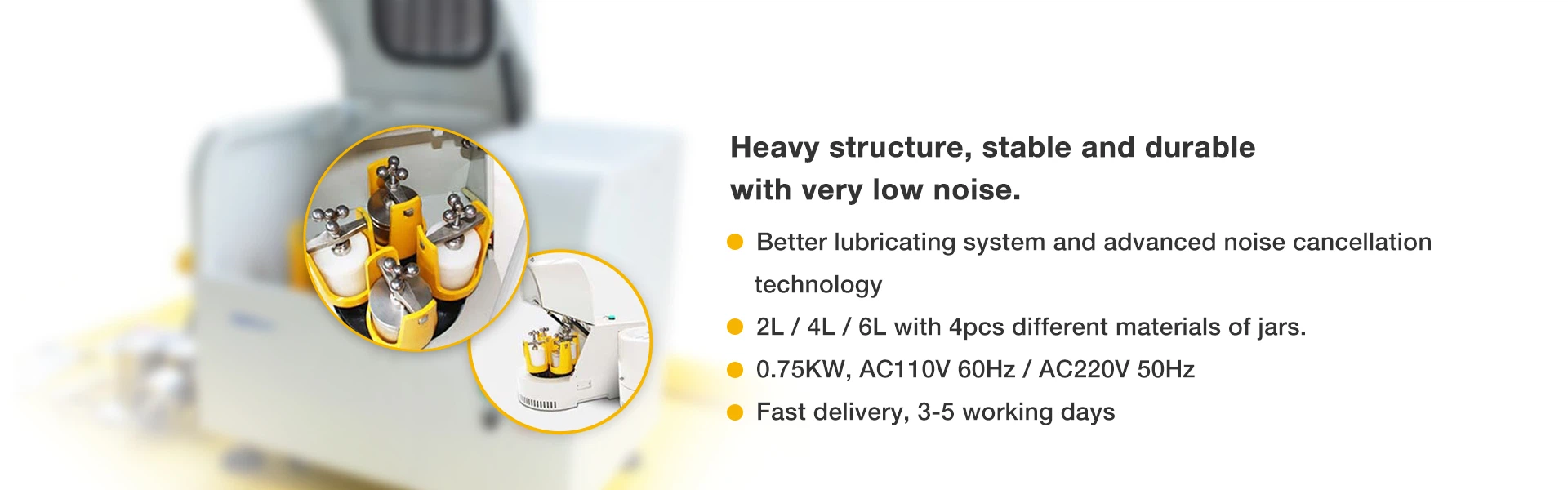
A planetary ball mill is a type of ball mill that is used for fine grinding or mixing materials like ores, chemicals, ceramic raw materials, and paints. It consists of a rotating "planetary" disk, which contains one or more grinding jars, mounted eccentrically on a sun wheel. The rotation of the sun wheel causes the grinding jars to move in a circular path around its own axis, while also rotating around the center of the sun wheel.
Here are some key features and aspects of planetary ball mills:
High Energy Efficiency: Planetary ball mills are known for their high energy efficiency due to the intense grinding action and high impact forces generated by the grinding jars and the grinding balls or beads inside them.
Multi-Directional Motion: The unique design of planetary ball mills allows for multi-directional motion of the grinding jars, which results in more effective grinding and mixing of materials. This multi-directional motion ensures uniform grinding and homogenization of the sample.
Variable Speeds and Control: Planetary ball mills often offer variable speed settings and control options, allowing users to adjust the speed and energy input according to their specific requirements. This flexibility makes planetary ball mills suitable for a wide range of applications and materials.
Wide Range of Applications: Planetary ball mills are widely used in various fields such as materials science, chemistry, pharmaceuticals, geology, ceramics, and nanotechnology. They are used for grinding, mixing, homogenizing, and mechanical alloying of materials.
Different Models and Configurations: Planetary ball mills are available in different models and configurations to suit different application needs. They may vary in terms of the number of grinding stations, the volume of the grinding jars, and the maximum rotational speed, among other factors.
Overall, planetary ball mills are versatile and efficient tools for fine grinding, mixing, and mechanical alloying of materials, making them valuable equipment in research laboratories, industrial settings, and academic institutions.


