






Description
Core Working Principle & Technical Advantages
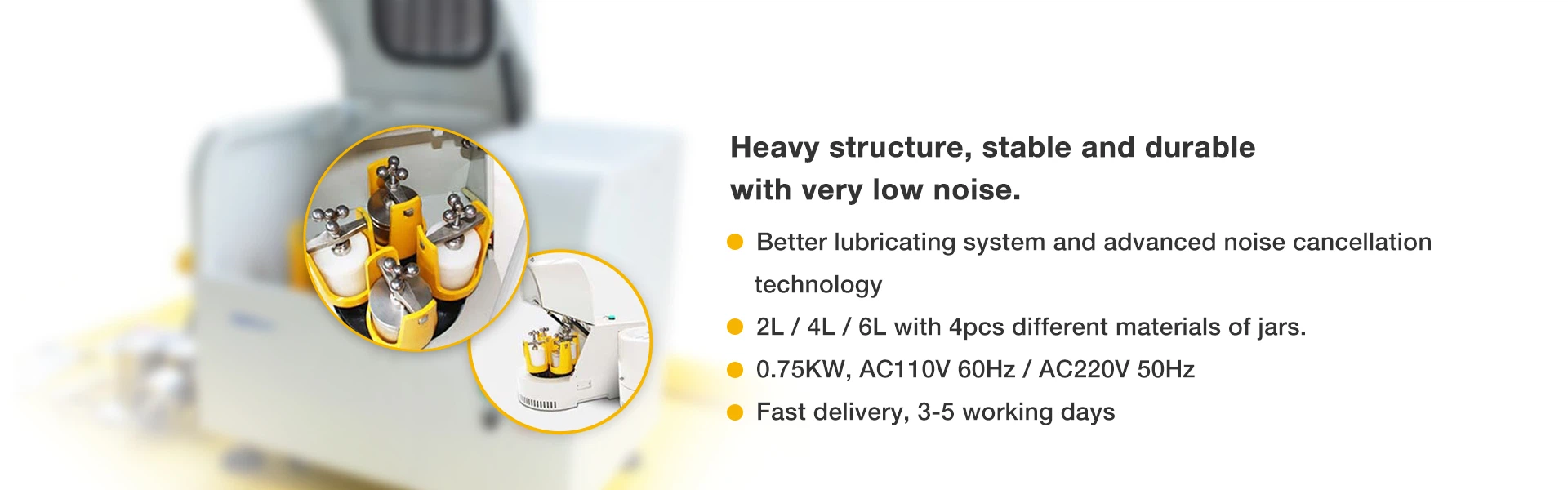
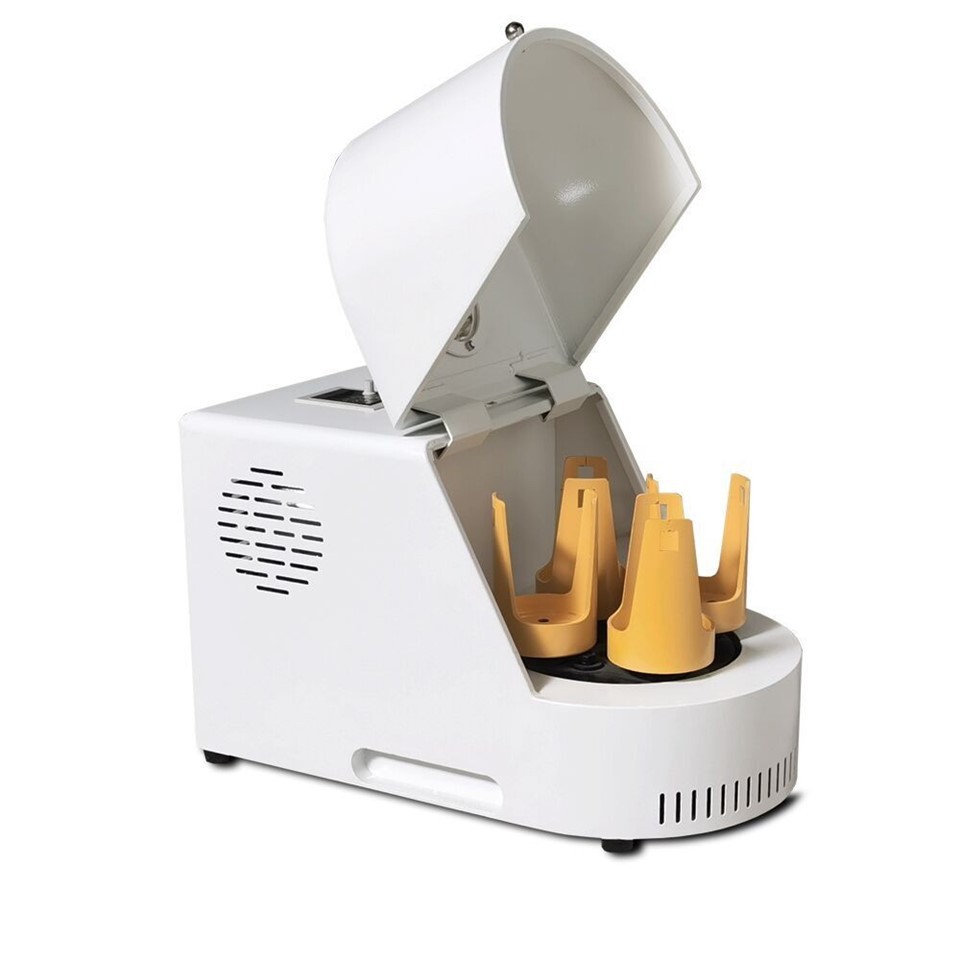
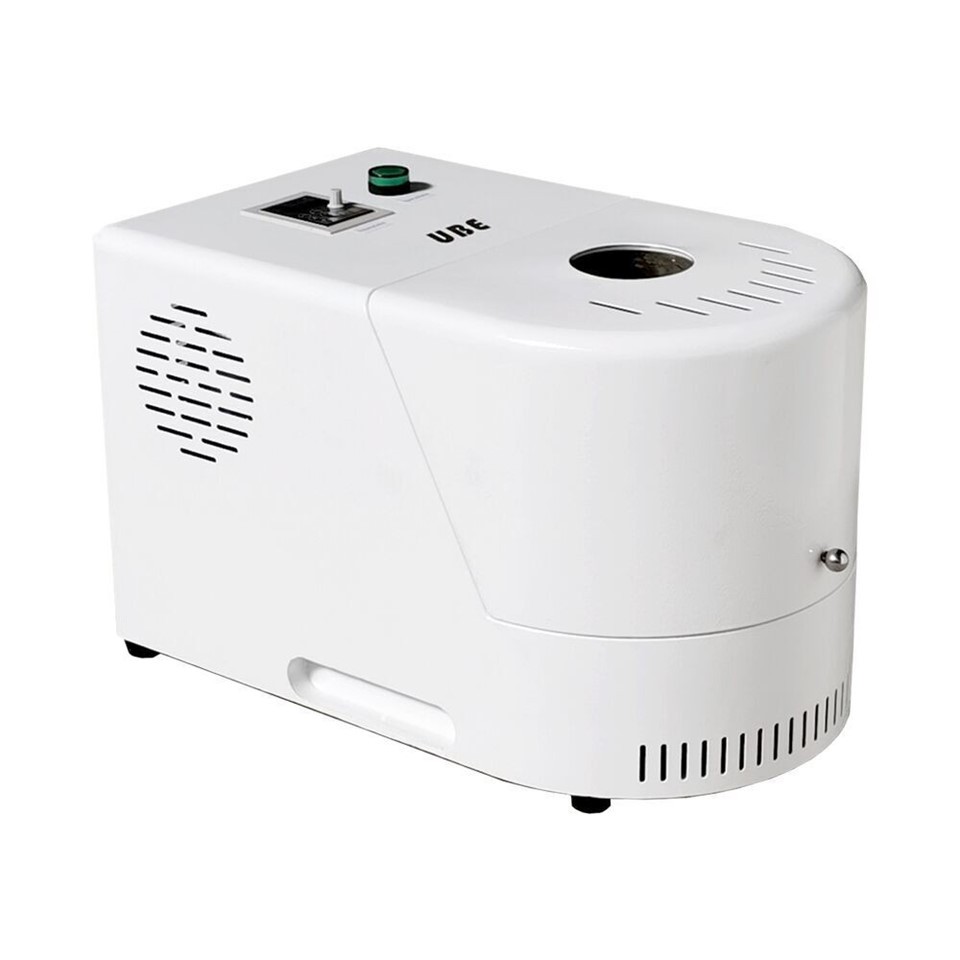
The 0.4L planetary ball milling machine adopts an optimized dual-motion structure that integrates high-speed revolution and reverse rotation, which is the core of its efficient grinding performance. When the main motor drives the turntable to revolve (around the central axis), each grinding jar installed on the turntable rotates in the opposite direction at a higher speed. This creates a superposition of centrifugal force and tangential force, generating an impact energy up to 40G-far exceeding traditional ball mills. Unlike ordinary ball mills, this equipment features a stepless speed regulation system that allows precise adjustment of revolution (0-550 rpm) and rotation (0-1100 rpm) speeds, enabling customized grinding intensity for different materials. Additionally, the sealed grinding chamber and wear-resistant jar materials (e.g., zirconia, agate) ensure zero cross-contamination, a critical advantage for laboratory sample preparation and high-purity material processing. The optional water-cooling jacket further solves the problem of overheating during long-term grinding, protecting heat-sensitive materials from degradation.
Diversified Application Fields & Industry-Specific Uses
As a compact, high-performance laboratory equipment, the 0.4L planetary ball mill is widely used in both academic research and industrial small-batch production, with outstanding performance in the following fields:
Nanomaterial Preparation: Synthesis of nano-powders (e.g., graphene, nano-silver, calcium carbonate), particle size reduction from micrometers to nanometers (10-200nm) for advanced material development.
Pharmaceutical & Biomedical Engineering: Grinding of drug powders, herbal extracts, and medical implants (e.g., titanium alloy powders for 3D printing), ensuring uniform particle size to improve drug solubility or implant biocompatibility.
Environmental Science: Processing of soil samples, sewage sludge, and waste catalysts for heavy metal detection or resource recovery (with acid-resistant PTFE jars to avoid sample corrosion).
New Energy Materials: Preparation of battery electrode materials (e.g., lithium iron phosphate, graphite powder), mixing of active substances and conductive agents to enhance battery performance.
Aerospace Materials: Grinding of high-temperature alloy powders, ceramic matrix composites, and lightweight metal powders (e.g., titanium alloy, aluminum-lithium alloy) for material performance testing.
Cosmetics & Daily Chemicals: Production of ultra-fine pigments, mineral powders (e.g., talc, mica), and skincare product additives, achieving smooth texture and stable dispersion.
Geological & Archaeological Research: Grinding of rock samples, fossil fragments, and mineral specimens for elemental analysis (XRF) and dating studies, preserving sample integrity.
Detailed Technical Specifications
|
Category |
Key Specifications |
|
Basic Parameters |
Effective volume per jar: 0.4L; Optional jar quantity: 1/2/4 jars (total volume up to 1.6L); Sample capacity per jar: 60-320mL (15%-80% of jar volume) |
|
Grinding Components |
Jar materials: Y-TZP zirconia (hardness ≥ HRA 90), alumina (99.7% purity), tungsten carbide (density 15.6g/cm³), agate (natural stone, for non-metallic samples), PTFE (chemical resistance); Grinding balls: 2-12mm diameter (customizable), materials matching jars |
|
Performance Parameters |
Revolution speed range: 50-550 rpm (precision ±5 rpm); Rotation speed range: 100-1100 rpm (revolution:rotation = 1:2); Maximum centrifugal acceleration: 42G; Grinding efficiency: 30%-50% higher than conventional ball mills |
|
Power & Operation |
Power input: 250W (high-torque motor); Power supply: Universal voltage (110-240V, 50/60Hz); Timer: 0-99 hours 59 minutes (cycle mode available: grind-rest-repeat); Control panel: Digital LCD display, one-key operation |
|
Physical & Safety Features |
Machine size (L×W×H): 500×300×300 mm; Net weight: 28 kg; Safety protections: Overcurrent protection, jar lid interlock (prevents operation when lids are loose), anti-vibration rubber feet, emergency stop switch; Operating humidity: ≤80% (non-condensing) |
Practical Grinding Cases & Results
Case 1: Soil Sample Grinding for Heavy Metal Detection
Raw Material: Dried soil samples (sandy loam, particle size: ≤2mm), 200g per jar (needs grinding to ≤75μm for ICP-MS analysis).
Grinding Setup: Agate jar + agate balls (10mm diameter, ball-to-material ratio = 4:1).
Process Parameters: Revolution speed = 280 rpm, rotation speed = 560 rpm, grinding time = 1 hour.
Outcome: Uniform soil powder with 100% passing 75μm sieve, no contamination (agate is inert), heavy metal detection results accurate (recovery rate: 95%-102% for Pb, Cd, Cr).
Case 2: Lithium Iron Phosphate (LiFePO₄) Electrode Material Mixing
Raw Material: LiFePO₄ powder (D50=3μm) + acetylene black + PVDF binder (mass ratio 8:1:1), total 120g per jar (mixed with NMP solvent to form a paste).
Grinding Setup: Stainless steel jar + stainless steel balls (8mm diameter, ball-to-paste ratio = 5:1).
Process Parameters: Revolution speed = 320 rpm, rotation speed = 640 rpm, grinding time = 2 hours.
Outcome: Homogeneous electrode paste with uniform dispersion of conductive agents, electrode sheet resistivity = 8.5×10⁻³ Ω·cm, battery cycle life: ≥1500 cycles (capacity retention ≥85% at 1C rate).
Hot Tags: planetary ball mill for laboratory, China, manufacturers, suppliers, factory, price, principle, for sale


