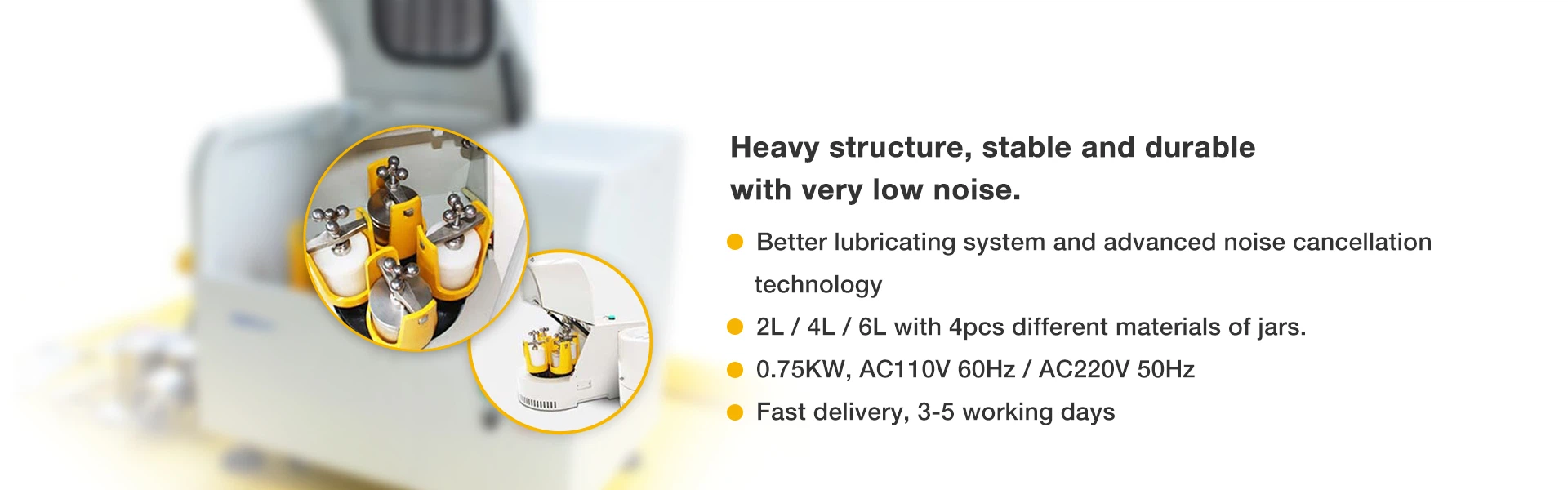
how a planetary ball mill works
Apr 24, 2024
A planetary ball mill is a specialized type of ball mill designed to achieve high-energy milling by utilizing planetary motion. It consists of a rotating sun wheel (also known as the sun disk) and one or more rotating grinding jars filled with grinding balls. The planetary motion involves the rotation of both the sun wheel and the grinding jars around their own axes, as well as in the opposite direction relative to each other.
Here's a step-by-step explanation of how a planetary ball mill works:
Sun Wheel Rotation:
The sun wheel (or sun disk) is driven by a motor and rotates around its own axis in the same direction as the rotation of the planetary disk.
Planetary Disk Rotation:
The grinding jars are attached to the planetary disk, which rotates around its own axis in the opposite direction to the sun wheel rotation.
The combination of the sun wheel and planetary disk rotations results in a planetary motion of the grinding jars, causing the grinding balls inside the jars to move and impact the material to be ground.
Grinding Ball Movement and Impact:
As the grinding jars rotate around the planetary disk, the grinding balls inside the jars are lifted up and then dropped onto the material to be ground.
The high-energy impact and friction between the grinding balls and the material particles result in size reduction, mixing, and homogenization of the material.
The grinding balls inside the jars also collide and rub against each other, contributing to further grinding and mixing of the materials.
Material Grinding and Mixing:
The planetary ball mill provides high-energy milling and is capable of grinding, mixing, and homogenizing various materials, including hard, brittle, soft, fibrous, and temperature-sensitive materials.
The grinding intensity and efficiency can be controlled by adjusting the rotational speed of the sun wheel and planetary disk, as well as the ratio of the grinding balls to the material.
Discharge of Ground Material:
After the desired grinding and mixing process is completed, the ground material can be discharged from the grinding jars through a valve or opening in the planetary ball mill.
The ground material is typically collected in a collection container or transferred to another container for further processing or analysis.
Advantages of Planetary Ball Mills:
High-Energy Milling: Planetary ball mills offer high-energy milling and are capable of generating high impact and grinding forces, resulting in faster and more efficient size reduction compared to conventional ball mills.
Versatility: Planetary ball mills are versatile and can be used for various applications, including grinding, mixing, homogenizing, and mechanical alloying of materials.
Uniform Particle Size: The planetary motion and high grinding energy of planetary ball mills result in uniform particle size distribution and high-quality ground products.
Applications:
Material Research: Planetary ball mills are widely used in material research, including nanomaterials, ceramics, polymers, metals, and composites.
Pharmaceuticals: Planetary ball mills are used in the pharmaceutical industry for grinding, mixing, and homogenizing active pharmaceutical ingredients (APIs), excipients, and formulations.
Geology and Mining: Planetary ball mills are employed in geology, mining, and metallurgy for grinding and analyzing geological samples, ores, minerals, and rocks.
Food and Cosmetics: Planetary ball mills are utilized in the food and cosmetics industries for grinding and mixing ingredients, powders, and formulations.
In summary, a planetary ball mill works by utilizing planetary motion to achieve high-energy milling and size reduction of materials. The combination of rotational movements of the sun wheel and grinding jars results in intense grinding and mixing of the materials, producing uniform particle size distribution and high-quality ground products. Planetary ball mills are versatile and widely used in various industries and research fields due to their high efficiency, versatility, and ability to process a wide range of materials and applications.